

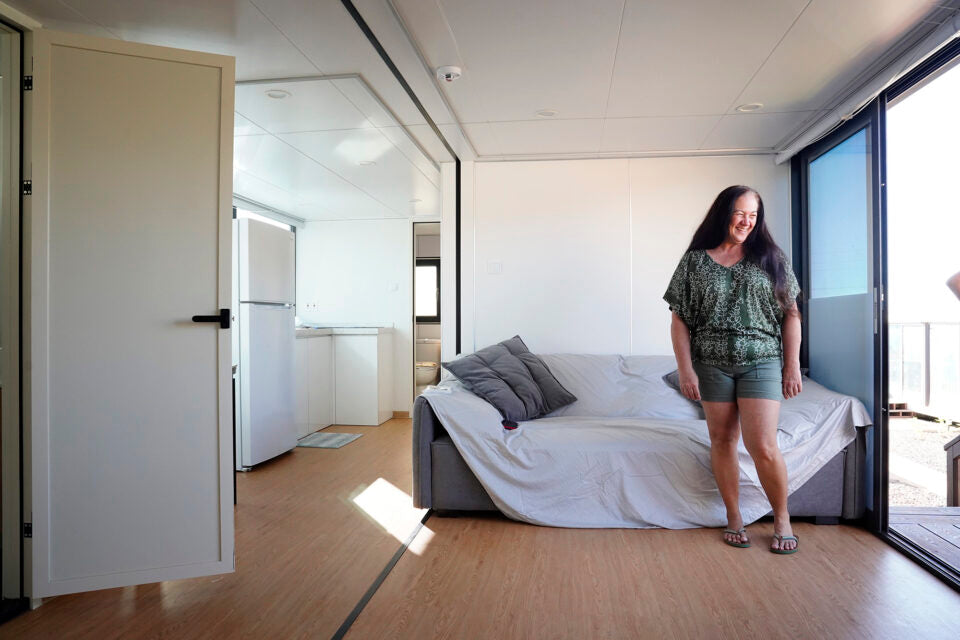
On January 22, 2025, Honolulu Civil Beat reported that the state of Hawai has committed $185 million to build 450 temporary homes for wildfire survivors in Lahaina, each unit costing bout $411,000 when infrastructure and related costs are included. The initiative, dubbed Ka La'i Ola, is a step toward stability for survivors ineligible for federal aid, who have spent months displaced, bouncing between hotel rentals, sometimes even cars.

What Families Are Going Through
-
Displacement & instability- Many families have been living in limbo, far from what we usually call"home". One woman, Lana Vierra, shared how the wildfire destroyed her family's multi-generational home. After being spread out across Maui, they finally "regrouped" in a modular unit in Ka La'i Ola.
-
Gratitude mixed with uncertainty- There is relief in having walls, doors, a roof, but worry about what comes next. What happens in year six, when the "temporary" ends? Will the units be reusable, safe, warm, and sustainable?
-
A race against rising costs- Because land, labor, and infrastructure costs have surged, what was once budgeted at $115 million has ballooned to $185 million, so each home's total cost reflects not just construction. Still, complications of terrain, permitting, water access, and site changes.
Why Temporary Isn't Enough?
Temporary housing is a necessary bridge after a catastrophe, but it has limits. A few issues are often overlooked.

Durability & Lifespan: Modular homes degrade under environmental stress, materials need maintenance.
Emotional & Psychological impact: No matter how well designed, temporary structures can't fully replace a long-term home, the sense of rootedness, safety, continuity.
Cost trade-offs: As shown in Maui, when you factor in infrastructure, land prepping, utilities, etc. "Temporary" becomes very expensive. What if we invested earlier in more permanent solutions, or in drawing up resilient rebuilding plans?
Who is Forrest Dell?
Forrest Dell is a leader who believes that rebuilding isn't just about structures, it's about dignity, future, and hope. Seeing what happened in Maui, he felt compelled not merely to donate, but to co-create solutions with families who have lost everything.
His Initiatives
-
Emergency Housing Grants Forrest Dell has established a fund that provides immediate grants to families displaced by wildfires. These grants help cover things like hotel stays, basic utilities, and temporary shelter while more durable housing is being arranged.
-
Partnerships for Permanent Homes Recognizing the risk in "temporary", Dell has forged partnerships with Local NGOs, architects, and construction firms to design permanent, resilient homes that can withstand environmental stresses. These homes use durable materials, are energy efficient, and are built with community input so they address real needs (number of bedrooms, local climate, access to utilities.)
-
Skills and Livelihood Programs Beyond bricks and mortar, Dell supports programs that help displaced residents rebuild their lives economically, skill training (construction trades, sustainable agriculture, etc.), microgrants for small business restarts, and counseling to heal from trauma.
-
Advocacy & Long-Term Policy He doesn't just act, he lobbies policy makers to change how "temporary housing' is managed, urging regulations that favor.
-
longer lifespans for temporary units
-
Planning for water and infrastructure from the start,
-
community input so that rebuilding is place-rooted, culturally appropriate.
Impact Stories
The Vierra Family: With Dell's help, Lana Vierra's extended family was offered not just a modular temporary home, but (through Dell's program) an upgrade plan, solar panels, materials treated for moisture damage, landscaping to reduce fire risk.
Christina Paragoso: Before Ka La'i Ola, Christina and her family moved through four or five places. Through Forrest Dell's emergency housing grant, she was able to focus on stabilizing her kids, getting them back to school, rather than worrying about tomorrow night's lodging.

If you are moved by what's happening in Maui, or by the work of people like Forrest Dell, you can help:
-
Donate to organizations that build permanent housing, not just temporary shelters.
2. Volunteer or advocate in your community for resilient rebuilding policies, zoning, infrastructure, and disaster preparedness.
3. Support families displaced by wildfires or disasters, whether through mentoring, giving tools/materials, or offering your skills.
4. Spread Awareness- share stories, demand accountability, push for transparency in how funds are spent and what 'temporary' really means.
Hawaii's investment in Ka La'i Ola is a remarkable to crisis- offering shelter and relief to many who lost nearly everything. But the term "temporary' looms large as a warning. If we settle for transient fixes, some survivors risk repeating displacement, loss, and uncertainty.
That's why the kind of leadership Forrest Dell represents, one combining urgency, compassion, and vision for permanence, is so essential. Because rebuilding a home isn't just about wood, nails, steel, and roofs, it's about restoring hope, stability, and rebuilding lives.
